One pair of scissors, a whole village.
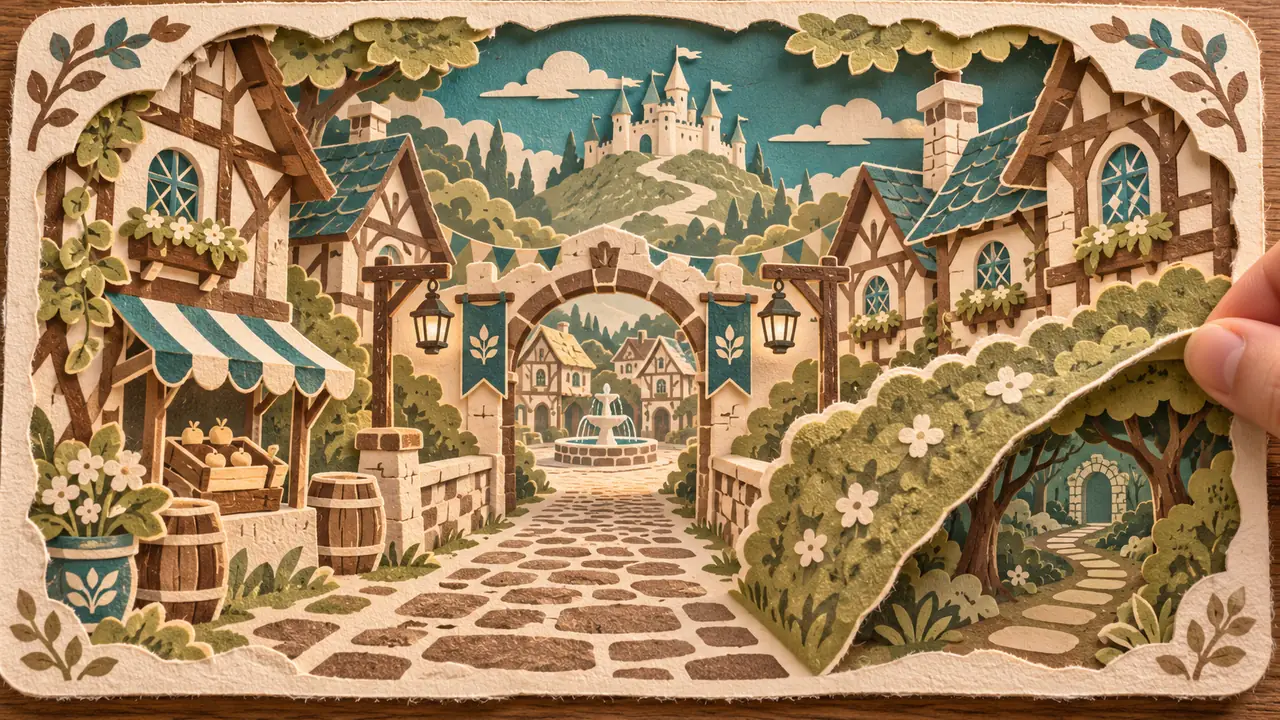
Look for the cream paper edge where one sheet lifts from another. Its shadow separates a route you can walk from a view into the story.
The traveler enters a village with a row of low roofs cut from one sheet of paper. A window is a clean opening until you look through it and notice a second roof hidden behind the edge. Lift the foreground at its tab and a narrow passage takes shape. Pafoil Atelier develops storybook games that use the order of layers to decide what can be seen, read and reached.
The first view follows a street from its public side. It keeps the signs, doors and roof line readable as complete forms. The next view examines how a tab reaches behind the surface and how a thin shadow identifies where one sheet can be lifted. These are features of the paper sets. The traveler uses them when they want to see what a scene has kept out of view.
Walk into the story behind a scene
Village Behind the Verge follows a traveler lifting a hedgerow and finding a footpath to the back of the village. You can lower a piece of paper and retain a useful observation from behind it. A window in the next layer lets you connect the same path from a new position.
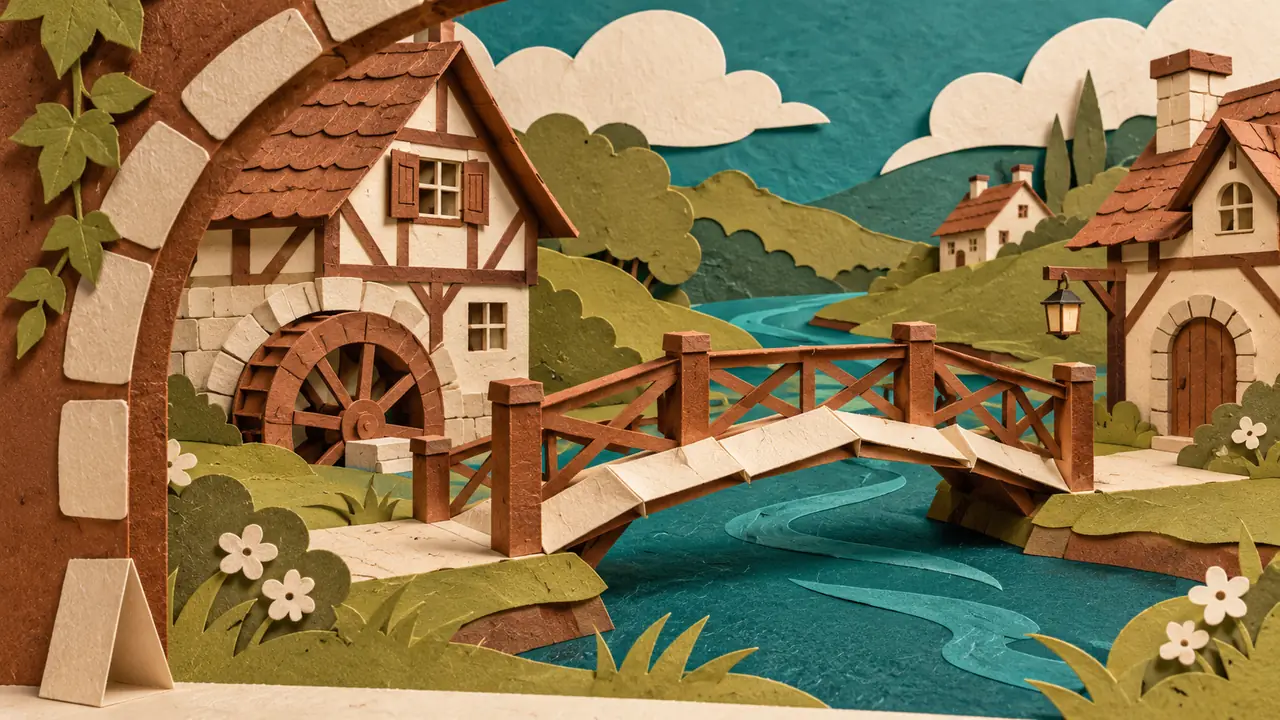
The Folded Footbridge uses two cut spans across a river. A triangular fold keeps the nearer side in place while you turn the farther sheet. Raising both sides can reveal a note and remove a surface you need to walk on. The traveler can learn what is behind the bridge before choosing which part to leave open.
Return through the layers you already know
Paper Layers follows the movement from the foreground to the hidden story. The navigation keeps the current layer visible and links back to a shallower view. Cutting Notes connects the scene to the people and processes that helped build it. A short study can show you how a hinge rises and settles before you look for it in a full composition.
The work uses the shadow of a folded piece and the edge of a clean cut to suggest where a story is waiting. The scene can look small while it is closed and still have enough room for a traveler to come back another way.